
Your body isn't broken. It's changed. Understanding stubborn weight after menopause
You've been eating the same way you always have. You're still moving. You're doing everything right (or at least everything you've always been told is right). And yet something has shifted. The weight that used to respond to a few weeks of eating carefully just... doesn't anymore. And a lot of it seems to have settled somewhere new.
If this sounds familiar, I want to say something important before we go any further.
This is not a willpower problem. It is not laziness. It is not your fault.
It is biology. And once you understand what's actually happening in your body after menopause, the frustration may not disappear — but at least it all starts to make sense.
Something fundamental has changed
For most of your adult life, your metabolism operated within a hormonal environment shaped largely by oestrogen. Oestrogen does far more than regulate your menstrual cycle — it plays a significant role in how your body stores fat, how sensitive your cells are to insulin, where energy gets directed, and how your body responds to what you eat.
When oestrogen declines after menopause, that hormonal environment changes — and with it, the rules your metabolism has been playing by.
Fat storage patterns shift. Where your body once distributed fat more evenly, it now tends to direct it toward the abdomen — a pattern driven by the interaction between declining oestrogen and rising cortisol, the stress hormone that becomes more metabolically influential as oestrogen falls.
Insulin sensitivity often decreases. This means your cells become less efficient at responding to insulin — the hormone that manages blood sugar. When insulin sensitivity drops, blood sugar becomes more volatile, energy becomes less stable, and the body is more inclined to store energy as fat rather than burn it.
Muscle mass tends to decline more readily. Oestrogen has a protective effect on muscle tissue. As it falls, maintaining muscle requires more deliberate effort — and muscle is metabolically active tissue, meaning less of it means a slower metabolic rate over time.
None of this is inevitable in its impact. But it does mean that approaches to eating and movement that served you well at 35 or 45 may genuinely need to evolve.
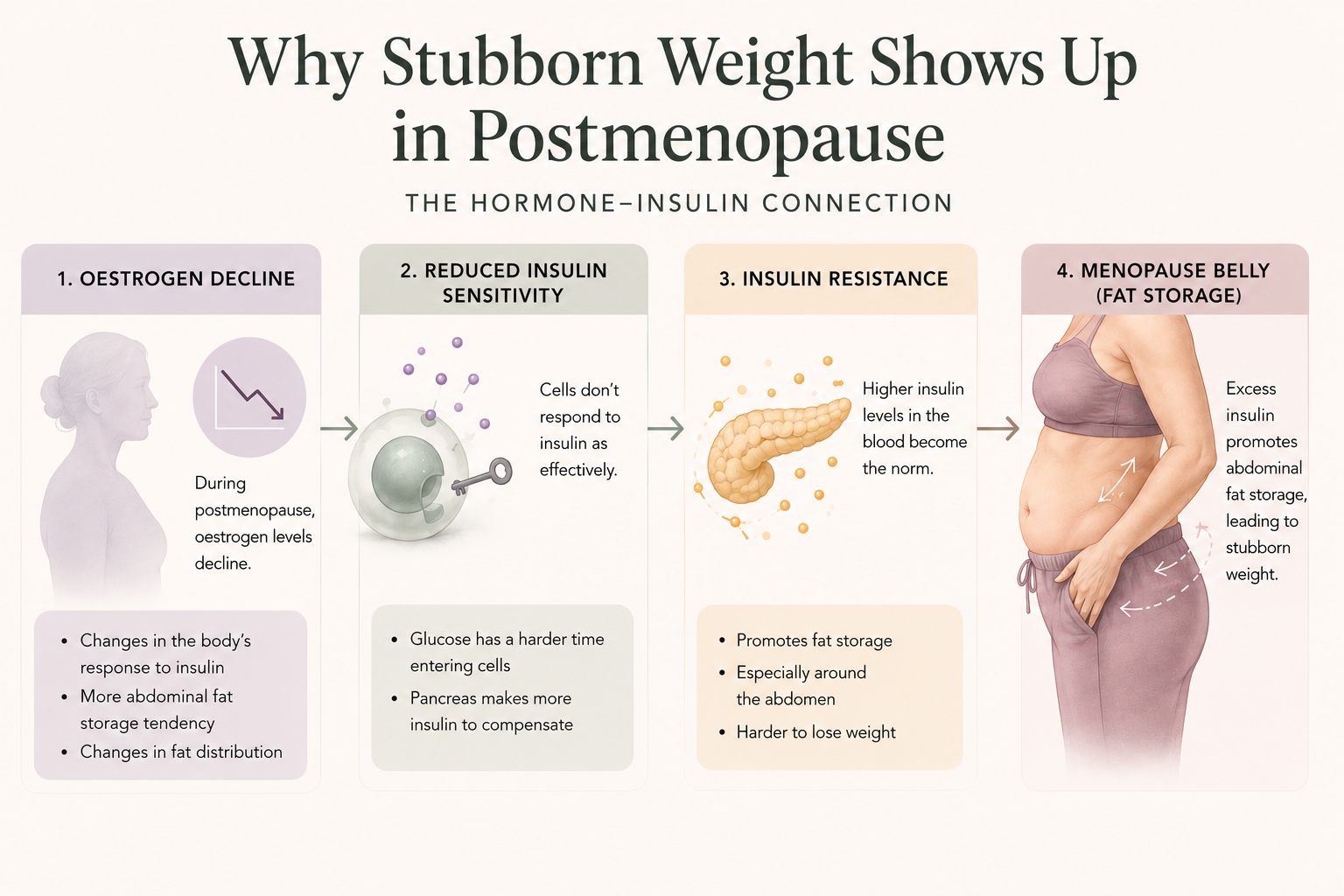
Understanding these biological changes can be self-empowering
Why eating less often isn't the answer
One of the most common responses to post-menopausal weight changes is to eat less. It feels logical — if weight is going up, reduce the input. But for many post-menopausal women, this approach either doesn't work or makes things worse.
Here's why. When you significantly restrict calories, your body — already navigating a lower oestrogen environment — can respond by further slowing its metabolic rate, increasing stress hormones, and breaking down muscle tissue for energy. The very tissue you need more of, not less.
What tends to matter far more than how much you eat is what you eat, and specifically, how the food you choose affects your blood sugar and insulin levels throughout the day.
The blood sugar connection
The reduced insulin sensitivity and susceptibility to developing ‘insulin resistance’ in post-menopause means that carbohydrate-heavy meals, even ones you've eaten for years without issue, can now produce more pronounced blood sugar spikes and the inevitable crashes that follow, often referred to as the ‘blood sugar rollercoaster’. The repeated peaks and crashes that can occur far more easily in post-menopause drive carb cravings, fatigue, persistent hunger that makes eating less feel almost impossible, and more creation of fat that is stored around the middle.
Shifting the focus toward a way of eating that produces a gentler, more stable blood sugar response — reducing sugar, refined carbohydrates and ultra-processed foods, prioritising protein, vegetables, healthy fats and fibre — can make a meaningful difference to how your body manages energy and stores fat.
This isn't about following a rigid diet or cutting out entire food groups. It's about understanding that your post-menopausal body has a different relationship with carbohydrates than it did before, and eating in a way that works with that biology rather than against it.
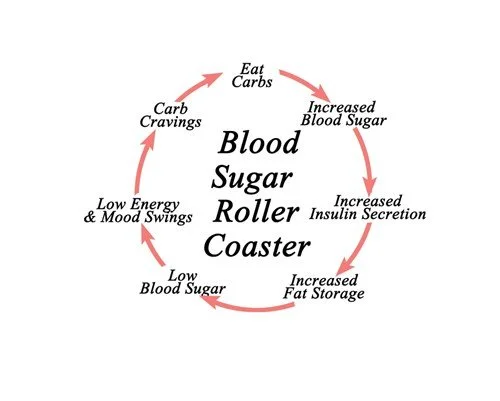
The blood sugar rollercoaster in post-menopause
What tends to help
While every woman's experience is individual, and what works will always depend on your own health history, circumstances and needs, there are some nutritional and lifestyle shifts that research suggests may support healthier weight management after menopause:
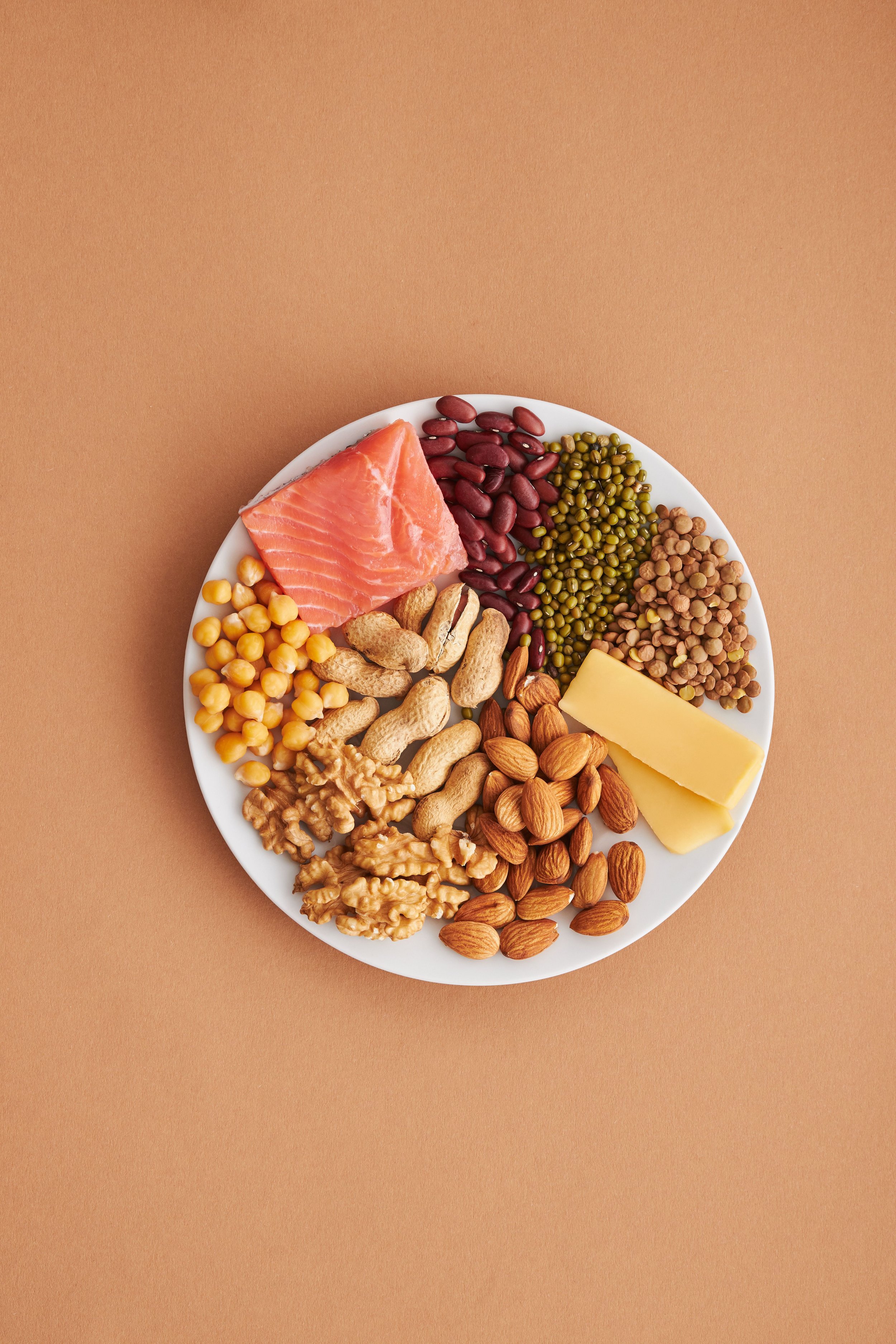
Prioritising protein.
Adequate protein supports muscle maintenance, promotes satiety, and has a relatively modest effect on blood sugar. Many post-menopausal women are eating less protein than their bodies actually need.
Reducing certain carbohydrates.
This doesn't mean avoiding all carbohydrates — vegetables, legumes, berries and whole foods all contain carbohydrates and are nourishing. It is more a case of becoming ‘carb conscious’ to be selective of the type of carbohydrate that forms part of your diet, and progressing towards a lower-carb way of eating that naturally reduces the refined, processed carbohydrate load that drives blood sugar volatility.
Supporting stress - and understanding why it matters more than you might think
Cortisol — your primary stress hormone — has a direct and significant relationship with both blood sugar and fat storage after menopause. Chronic stress causes chronically elevated cortisol, and this directly raises blood sugar independently of what you eat, promotes fat storage around the abdomen, disrupts sleep, and increases cravings for the very foods that drive further blood sugar volatility. After menopause, when oestrogen is no longer available to buffer some of cortisol's metabolic effects, chronic stress becomes an even more significant driver of the weight and metabolic changes many women experience. This means that addressing stress — through whatever practices genuinely work for you, whether that's time in nature, breathwork, rest, connection, talk therapy, or simply protecting space in your day — is not a soft optional extra. It is essential.

Photo by Taylor Heery on Unsplash
Movement — not just a calorie burner.
The most helpful reframe around movement after menopause is to stop thinking about it primarily as a way to burn calories and start thinking about it as one of the most effective tools available for regulating cortisol, improving insulin sensitivity, and maintaining the muscle mass your metabolism depends on. Gentle, consistent movement — particularly walking in nature, resistance-based exercise, and anything that brings genuine enjoyment rather than punishing effort — supports the nervous system as much as the body. High-intensity exercise, paradoxically, can raise cortisol further in women who are already under significant stress, so more is not always better. What matters most is finding movement that feels nourishing rather than depleting, and doing it consistently.
A note on thyroid health — because sometimes there can be something else going on.
It would be remiss not to mention that persistent fatigue, stubborn weight, constipation, low mood, hair thinning, and loss of the outer third of the eyebrows can all be symptoms of an underactive thyroid — a condition that is significantly more common in post-menopausal women, but is frequently underdiagnosed because standard GP testing does not always capture subclinical thyroid issues. If you are experiencing these symptoms alongside the metabolic changes of post-menopause, it is worth asking your GP for a full thyroid panel that includes thyroid antibodies, not just TSH. Nutritional changes can support thyroid health and overall metabolic function — but they work best when the full picture is understood. If something doesn't add up, it is always worth investigating further rather than assuming diet and lifestyle are the only factors at play.
Being patient with the process.
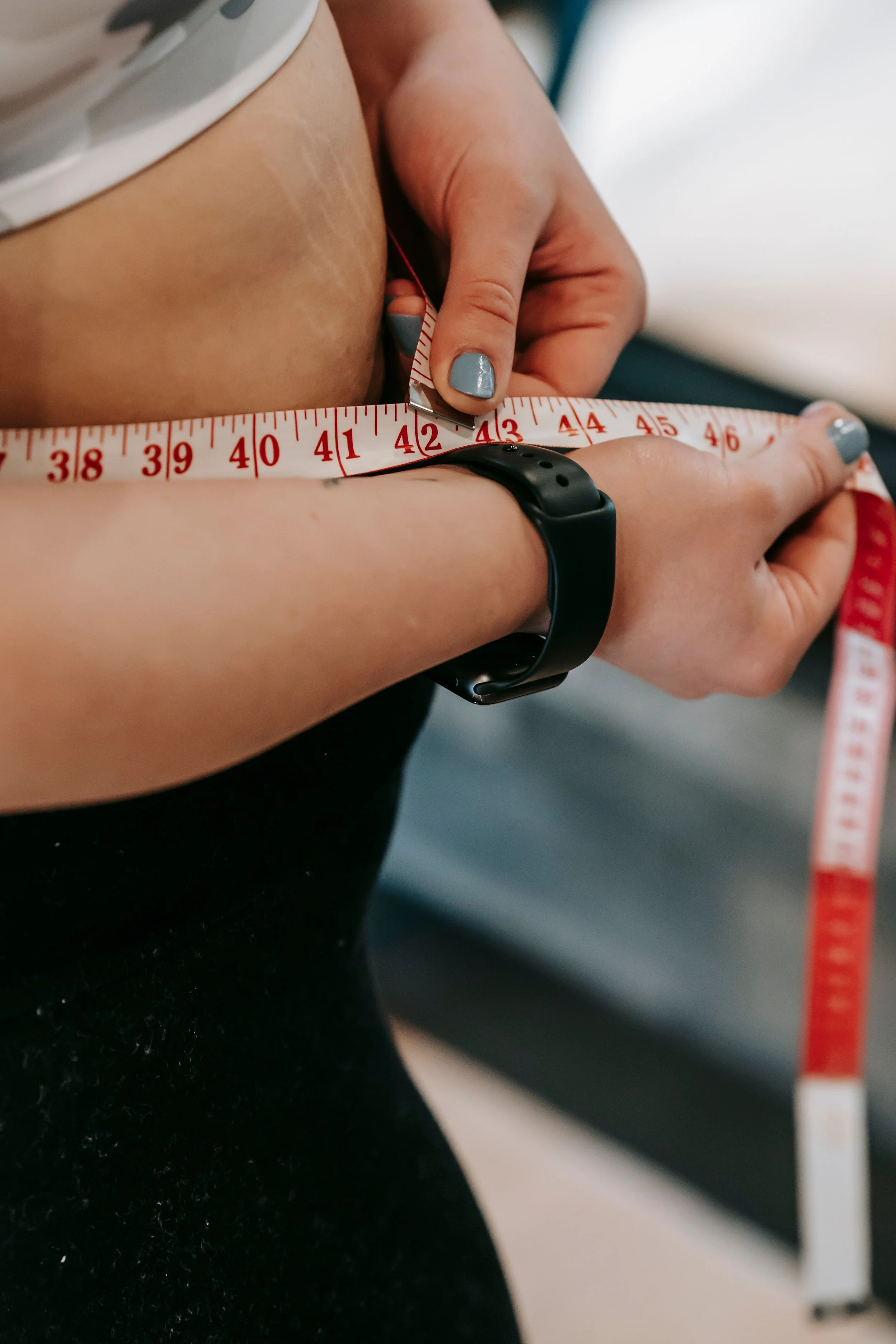
Post-menopausal metabolic changes took time to develop, and meaningful shifts in body composition take time too. Progress may look different from what you've experienced before, and non-scale victories like increased energy, better sleep quality, sharper thinking, and how your clothes fit (particularly around the waist) are often more meaningful markers than the number on the scales.
A final thought
The weight changes that come after menopause are real. They are driven by genuine physiological shifts that deserve to be understood and taken seriously — not dismissed, and not blamed on the woman experiencing them.
But they are not permanent, fixed, or beyond influence. Understanding what's changed is the first step. Working with your body's new biology — rather than fighting it with approaches designed for a different hormonal environment — is where real, sustainable change tends to begin.
If you're navigating this and would like support, I'd love to hear from you. The Better After Menopause page has more detail on the ways we can work together — from our free community to individual and group programmes built around exactly this.
Kirsty Groves is a registered nutritional therapist, founder of Revolution Nutrition, and a post-menopausal woman herself. She supports post-menopausal women through nutrition, community and the Low-Carb Reset programme. Find out more at revolutionnutrition.co.uk/better-after-menopause