
The Tiny Guests Who Keep You Alive (and why modern life is breaking their hearts)
This is a story that happens to be true.
I can still remember the exact moment.
I was sitting in human biology, about fourteen or fifteen, half-listening the way you do in lessons sometimes. And then the teacher said something about mitochondria - about how they weren’t always part of us, about how they used to be something else entirely - and I put my pen down.
Wait. What?
Something about it stopped me completely. The idea that inside almost every cell of my body there were these ancient, semi-independent structures with their own DNA, their own story, their own origin. Structures that had been making energy for living things since long before anything walked on land or breathed air or thought a single thought. It felt less like biology and more like discovering that the house you grew up in had a secret room no one had ever mentioned.
I've never really got over it, if I'm honest. That moment ignited my life-long passion for human biology.
And now, decades later, as the research piles up and mitochondria go from 'the powerhouse of the cell' - one of the most reductive sentences in the history of science education - to being recognised as regulatory control centres of almost everything that happens in our cells, I feel compelled to share what I have learnt. I don’t know the full story - nobody does yet, and that’s part of what makes this so exciting. But I know enough to understand why it matters deeply, for everyone. And that feels like reason enough.
So here it is.
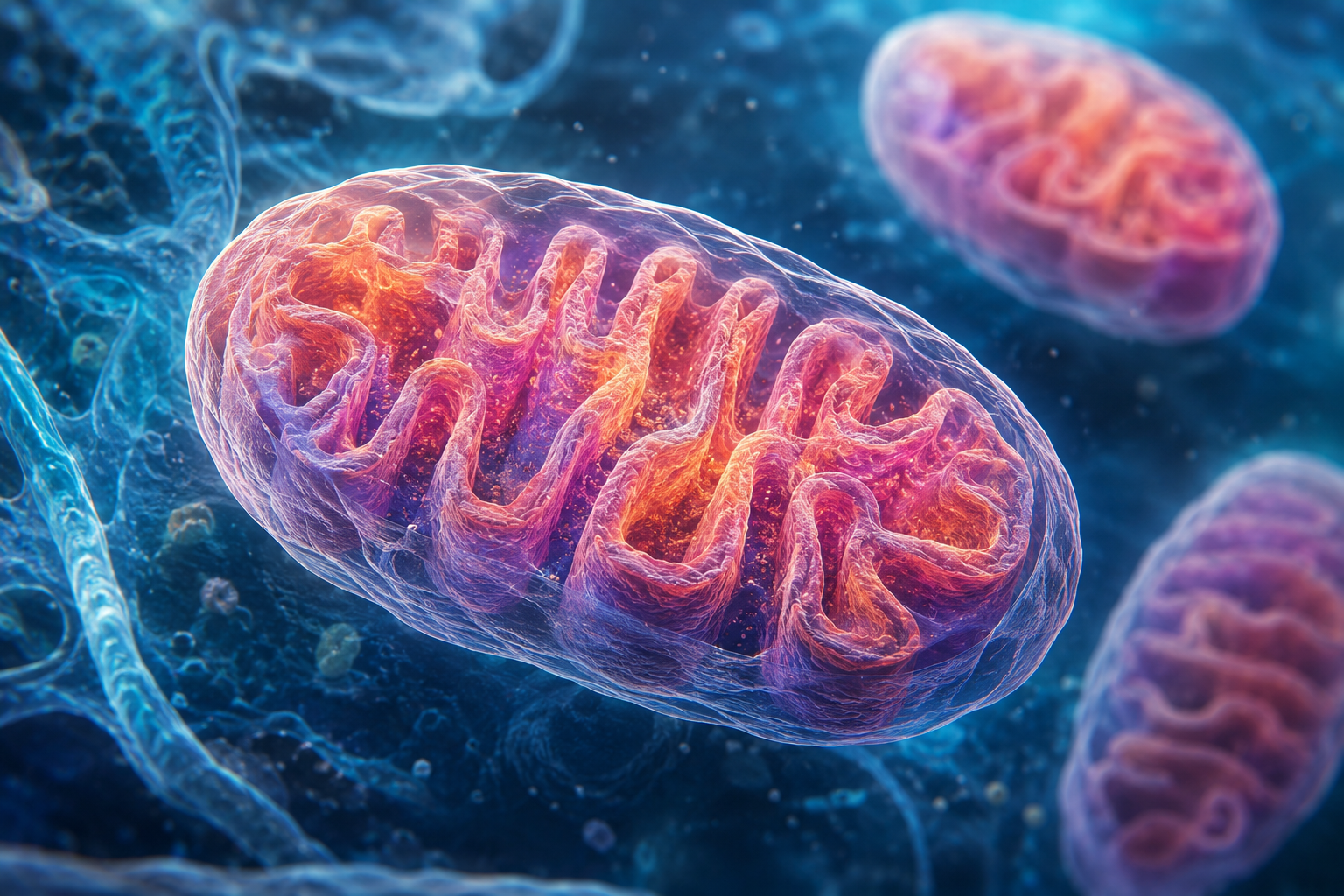
More than just powerhouses - mitochondria sense our environments and influence our cellular responses
Once upon a time - and we're talking about a very long time ago, roughly 1.5 billion years before anyone had heard of ultra-processed food or a 9pm Netflix scroll — something extraordinary happened.
A lone, wandering bacterium found shelter inside another cell.
It didn't invade. It didn't destroy. Instead, it stayed. And in staying, it changed everything.
The host cell offered protection. The little bacterium offered something even more precious: the ability to turn oxygen into energy. Together, they became something neither could be alone. This was the beginning of a partnership so ancient, so intimate, that we carry its descendants inside us to this day.
We call them mitochondria. And they are, quite literally, the reason you are alive.
The Guests who never left
Here's the part that still makes me stop and wonder: your mitochondria are not really you.
Not entirely, anyway.
They carry their own DNA — separate from yours, passed down only through your mother, a matrilineal thread stretching back through every woman in your lineage to the very first cells that made this deal with each other. They divide on their own schedule. They communicate in their own language. In a very real sense, you are not a single organism. You are a walking civilisation — and the mitochondria stand sentinel at the heart of it.
Every breath you take, every meal you eat, every step you walk — your mitochondria are at the centre of it. They take the food you eat and the air you breathe and spin it, through an almost incomprehensible chain of chemical reactions, into ATP: the energy currency of this cellular civilisation. Your heartbeat. Your thoughts. The repair of a scratch on your skin. The conversation happening right now between your cells.
Nothing happens in your body without them.
The Kingdom They Were Built For
For most of human history, the conditions our mitochondria evolved within looked something like this:
Movement throughout the day. Food that came from the ground, the water, the hunt — whole, seasonal, unprocessed. Periods of genuine hunger between meals. Cold nights and warm days. Rest that was real rest. Stress that was sharp and short, not low-grade and relentless.
In this environment, mitochondria thrived. They are, at their heart, stress-adaptive organisms. They respond to challenge by becoming stronger, more numerous, more efficient. Push them — through fasting, through movement, through cold — and they multiply. They fuse together into long, powerful networks. They clean house, recycling their own damaged parts in a process called mitophagy, emerging renewed.
This is mitochondrial hormesis: the principle that the right kind of stress makes them better. And for hundreds of thousands of years, daily life provided exactly the right kind of stress.
When The Kingdom Changed
Now here is where our fairy tale takes a darker turn.
Because somewhere along the way — and the acceleration has been rapid, really just the blink of an eye in evolutionary terms — the world our mitochondria were built for disappeared.
We stopped moving between meals and started sitting for hours. We stopped eating food that required effort to process and started eating things engineered in laboratories to light up our dopamine systems and dissolve almost instantly into the bloodstream. We swapped seasonal variation for year-round abundance. We replaced short, sharp stress with the chronic, grinding kind that never fully resolves. We lit our nights with artificial light and called it productivity.
And our mitochondria — still operating on two-billion-year-old software — began to struggle.
When glucose arrives in a relentless flood, with nowhere to go and no movement to burn it off, the mitochondrial machinery becomes overwhelmed. Instead of clean, efficient energy production, you get incomplete combustion. You get oxidative stress — a kind of cellular exhaust smoke, damaging the very membranes and mechanisms the mitochondria need to function. You get inflammation: not the fierce, purposeful kind that heals a wound, but the slow, smouldering kind that quietly undermines everything.
The sentinels and their amazing turbines begin to falter. Fewer of them. Smaller. Fragmented rather than fused. Less able to respond to the signals your body is sending.
And when your mitochondria aren't working well, nothing works well.
Your energy becomes unreliable — you wake tired, you crash mid-afternoon, you push through on caffeine and willpower. Your metabolism becomes sluggish. Your whole signalling system, which depends entirely on mitochondrial energy, starts to send garbled signals. Your brain, the hungriest organ in the body, begins to feel the fog. Your immune system, which relies on mitochondrial signalling to know when to act and when to stand down, loses its calibration.
This is not a character flaw. This is not laziness or weakness or lack of discipline.
This is biology meeting a world it was never designed for.
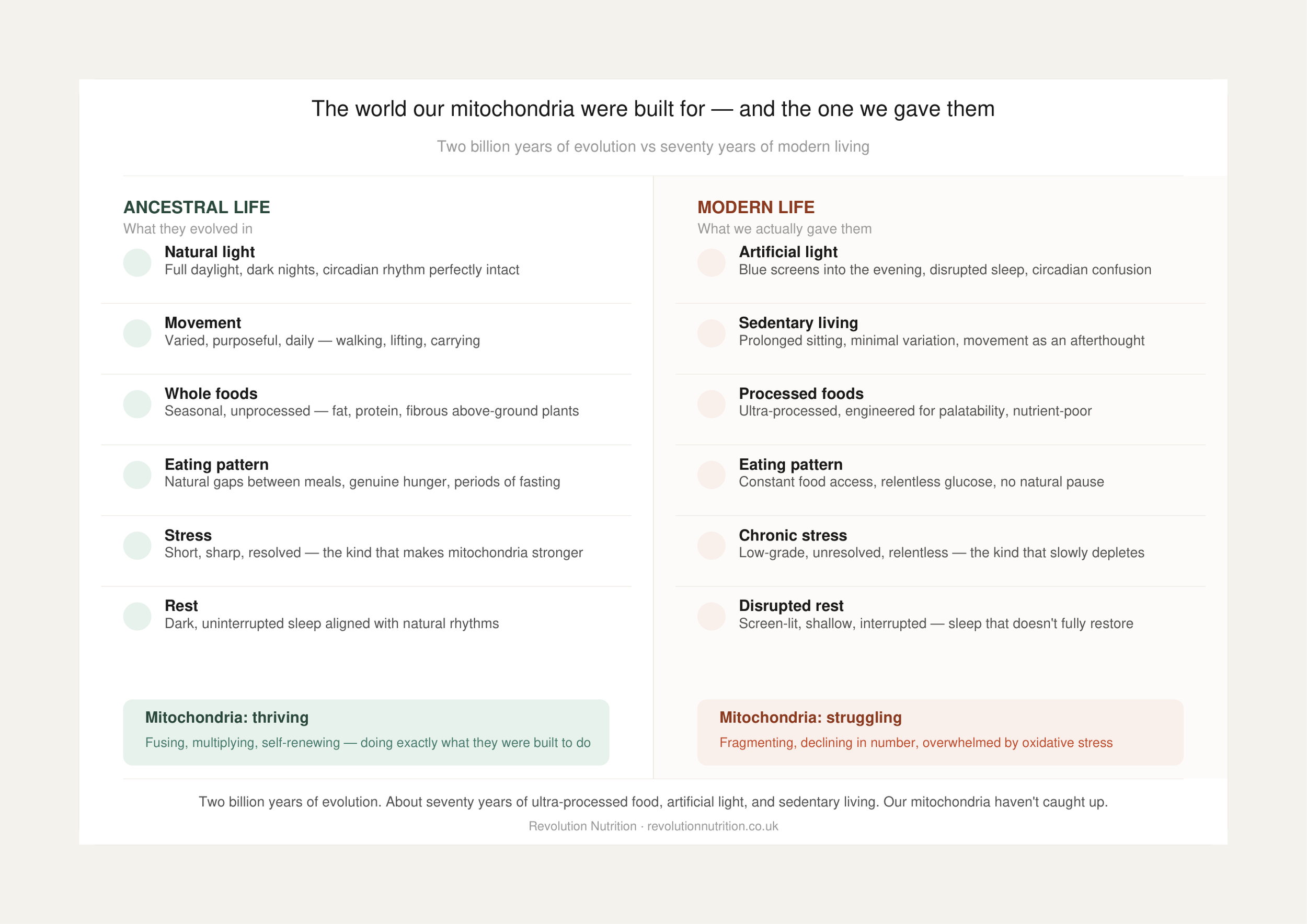
The environment our mitochondria evolved in looks nothing like the one live in now. Every item on this list is within our power to shift — even partially, even gradually.
And Here Is Where Menopause Enters the Story
If mitochondrial health matters for everyone, and it does, it matters with particular urgency for postmenopausal women. Because oestrogen, it turns out, is one of the mitochondria's greatest protectors.
Throughout our reproductive years, oestrogen acts like a guardian at the gates — stimulating mitochondrial biogenesis (the making of new ones), reducing oxidative stress, keeping the energy production machinery running smoothly. It's part of why, before menopause, women have different metabolic patterns to men. Different risks. Different resilience.
When oestrogen abruptly leaves in menopause, that protection goes with it. The mitochondria become more vulnerable to damage. Metabolic flexibility (the ability to switch between burning glucose and burning fat) decreases. The body becomes, for a time, genuinely less able to cope with the same glucose load it managed before.
This is why so many women find, seemingly overnight, that everything has changed. That the way they ate at 40 no longer works at 52. That the weight has shifted without any change in behaviour. That the brain fog is real, not imagined. That tiredness has a different quality to it now — something deeper, more stubborn.
It's not in your head. It's in your cells.
Returning To What They Know
Mitochondria are extraordinarily responsive to the right conditions. They are not passive. They are not fixed. Even in midlife and beyond, even after years of less-than-optimal circumstances, they retain the capacity to adapt, regenerate, recover.
What they need is a return, as much as we can manage, to the kind of conditions they were built for.
They need food that works with their biochemistry, not against it. That means stepping back from the relentless glucose flood by reducing refined carbohydrates and sugars that overwhelm their capacity, and feeding them more of what they are exceptionally good at using - FAT. Real, whole food fat. Oily fish. Eggs. Avocado. Good extra virgin olive oil. Nuts. Seeds. As well as some quality saturated fats from animal foods and coconut. The fat that was once a significant part of the human diet and that, increasingly, research is showing is beneficial, even favourable, to their functionality.
It means eating a diverse range of plant-foods, prioritising above-ground vegetables and berries that are polyphenol-rich and fibre-dense that feed our gut microbes (who themselves have their own intimate relationship with mitochondria), reduce inflammation, and provide essential antioxidants that protect cellular and mitochondrial health.
It means eating quality protein - to provide essential amino acids vital for mitochondria, and us, to repair and rebuild.
It means movement - regular, varied movement that gives mitochondria the challenge they were designed to respond to.
It means rest - real rest, dark nights with limited artificial light.
And it means re-aligning with nature - early morning light exposure, time spent outdoors, warmth, and cold. Because mitochondria can actually sense these beneficial environmental influences.
None of this is extreme. None of it requires perfection. None of it requires expensive bio-hacking equipment. It is, in essence, a return to something our biology already knows, and desperately needs.
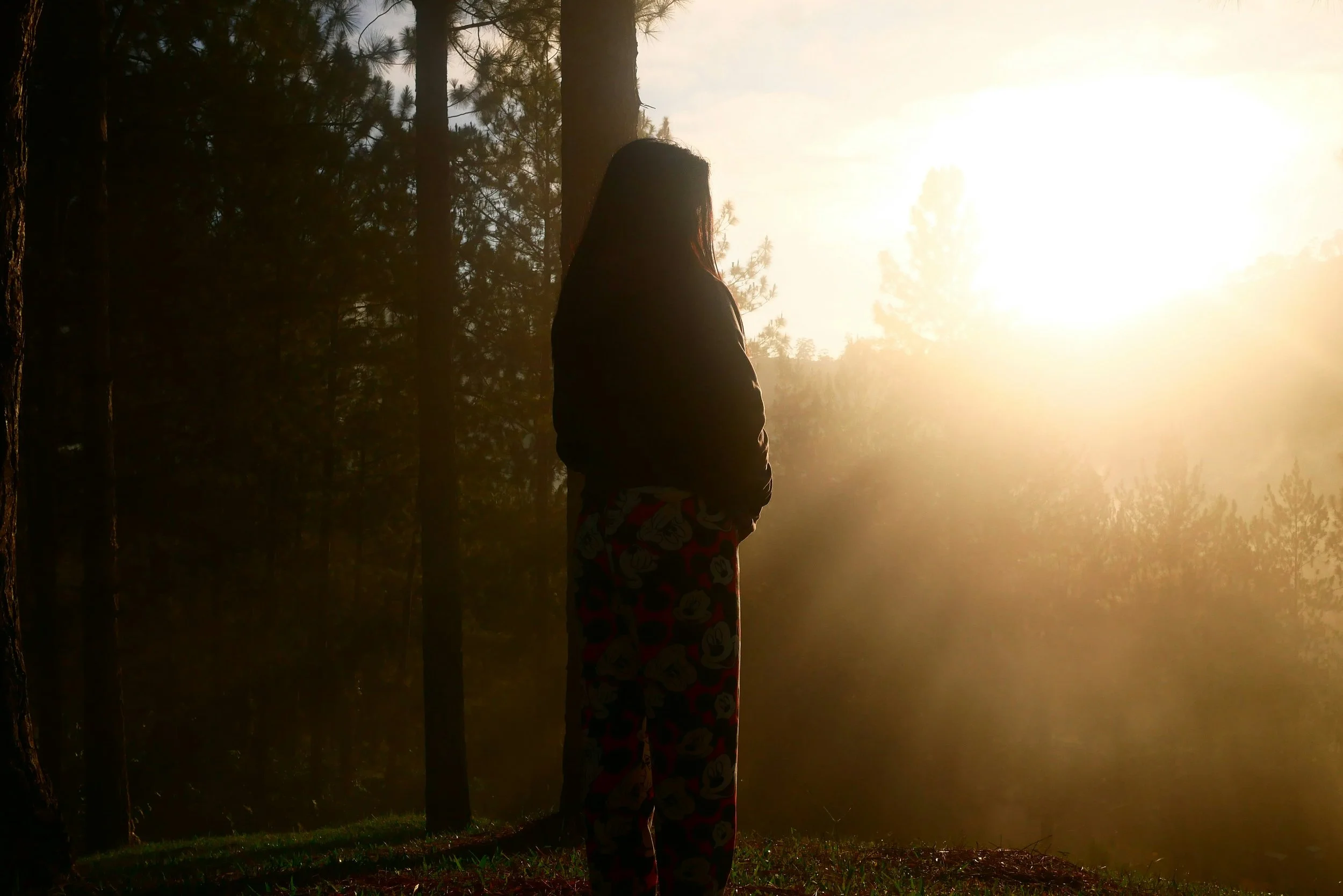
Emerging research suggests mitochondria are light-sensitive — responding to natural sunlight in ways that support energy production at a cellular level. Sometimes the most powerful thing you can do is simply step outside.
The Story Isn’t Over
Two billion years ago, a tiny organism took shelter inside a cell, and neither of them was ever the same again.
That story is still happening. Right now, inside you, in almost every cell of your body, that ancient partnership is doing its work. Burning, building, repairing, communicating, powering. Standing sentinel, quietly, keeping you alive.
The question is simply whether we give them the conditions to do it well.
And the answer, it turns out, is within our reach. It always has been.
If this resonates with you and you'd like to understand what eating, and behaving, for your mitochondria might look like in practice — for your body, your history, your life — I'd love to talk. Book a free Explore Call to find out how nutritional therapy can be a powerful tool.