
You haven't changed what you eat. You're still walking, still trying to be "good". And yet your clothes fit differently around the middle, and the scales won't budge.
If that sounds like you, I want to say this first: it isn't a lack of willpower. Something real has changed in your body, and the advice that worked at 35 often doesn't work at 55 or 60.
Let's look at what's going on.
Photo by Diana Polekhina on Unsplash
What changes in your body after menopause
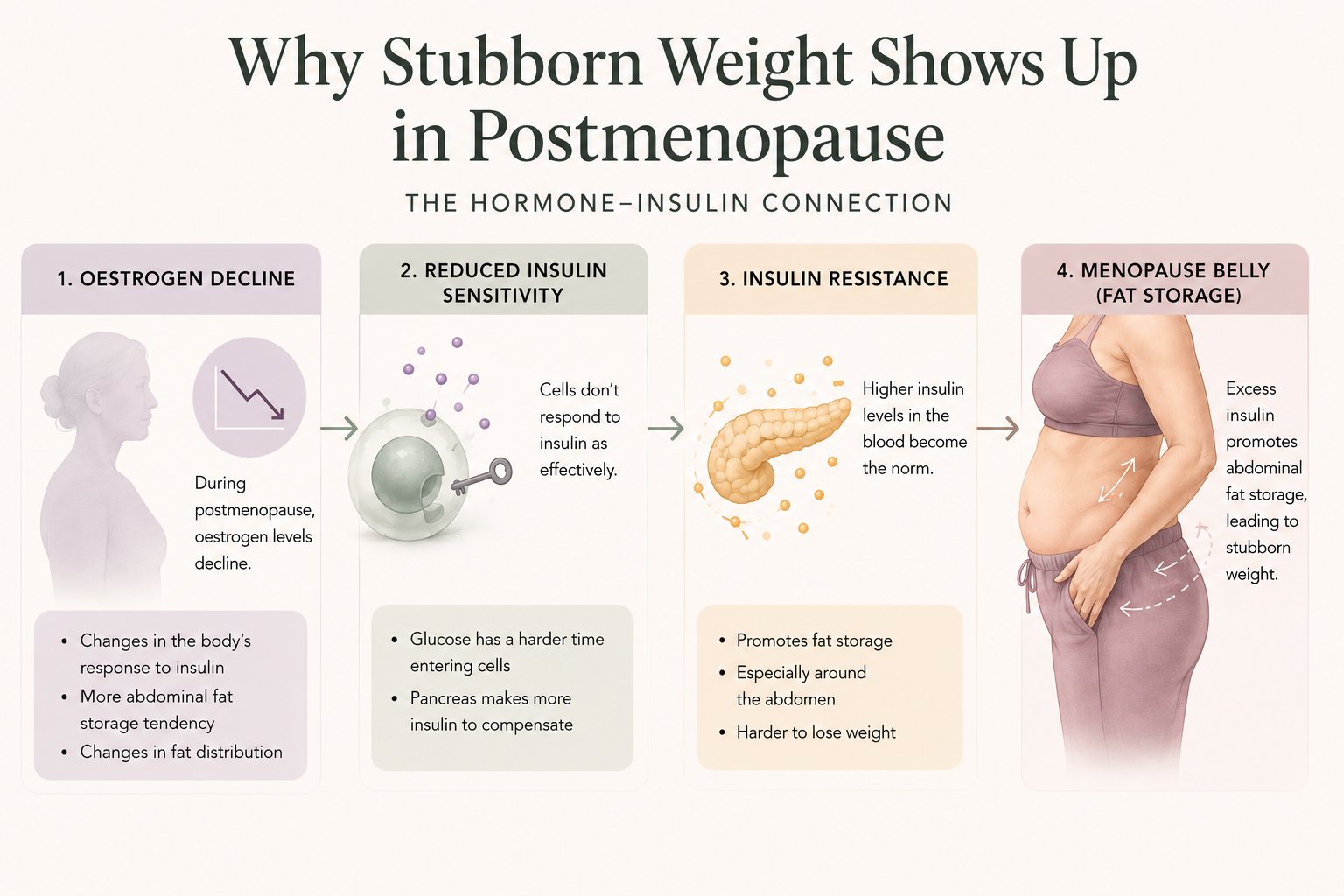
1. Oestrogen drops, and fat moves
Before menopause, oestrogen influences where your body stores fat, which is more often around the hips and thighs. After menopause, oestrogen falls and fat storage tends to shift towards the tummy. This includes visceral fat, the type that sits deeper around your organs. Many women notice this even when their weight on the scales hasn't changed much.
2. Your body may handle carbohydrate differently
Lower oestrogen is linked with changes in how well the body responds to insulin, the hormone that helps move sugar from your blood into your cells. When that response is less efficient, blood sugar can rise higher and stay up longer after meals, and your body may be more likely to store the excess around the middle.
That's why the same breakfast of toast and jam that was fine ten years ago can leave you hungry, foggy and craving something sweet by 11am.
3. Muscle slowly declines
We lose muscle as we age, and the drop in oestrogen is thought to speed this up. Muscle is one of the main places your body uses up glucose, so less muscle means less room to handle carbohydrate and a lower energy burn at rest.
4. Sleep and stress make it harder
Broken sleep is common after menopause, and poor sleep is linked with stronger appetite, more cravings (especially for sweet foods) and less stable blood sugar the next day. Add ongoing stress and it becomes harder still. None of this is your fault, but it does stack up.
Why the usual advice stops working
"Eat less and move more" is the advice most of us have heard. For many post-menopausal women it backfires. Cutting calories hard can leave you tired and hungry, and it may make muscle loss worse. Doing lots of extra cardio on top can feel like punishment without giving you much back.
The issue often isn't how much you eat. It's what's happening to your blood sugar and your muscle, and what your hormones are doing in the background.
Where a ‘Carb-Conscious’ approach fits
Carb-conscious doesn't mean no carbs, and it isn't keto. It means being aware of the kinds of carbohydrate you eat, how much, and what you eat them with, so your blood sugar stays steadier through the day.
In practice, that can look like:
Starting the day with protein, such as eggs, Greek yoghurt or smoked salmon, rather than relying on toast or cereal.
Choosing slower carbs like oats, beans, lentils, berries and vegetables more often than white bread, pastries and sugary snacks.
Not eating carbs on their own. Pairing them with protein, healthy fats and fibre can help soften the blood sugar rise after a meal.
Keeping it flexible. There are no banned foods and no rigid rules, because a plan you can live with is a plan you'll stick to.
For many women this is a much kinder middle ground than cutting carbs out completely or carrying on as before. I have found this is a far more manageable approach, and one that can be built on slowly. Change isn’t always easy, and often a big change all at once can become difficult to stick with. Gentle change allows flexibility, progression and adaptation.

Photo by Corryn Burtenshaw on Unsplash
Three things to try this week
Add protein to breakfast. Aim for a palm-sized portion, and see how you feel mid-morning.
Swap one refined carb for a slower one. Toast for oats, or crisps for nuts and an apple, for example.
Take a 10 to 15 minute walk after your biggest meal. Gentle movement after eating may help your muscles use up some of that glucose.
Small changes, repeated, tend to do more than a dramatic overhaul.
When to speak to your GP
Belly fat after menopause is common, but see your GP if you have rapid or unexplained weight change, ongoing bloating, new pain, or any bleeding after menopause. These should always be checked.
Want some help to get started?
Book a free Explore Call to have a chat with me about the different ways I work with post-menopausal women, whether that’s personalised nutrition or joining one of my group programmes.